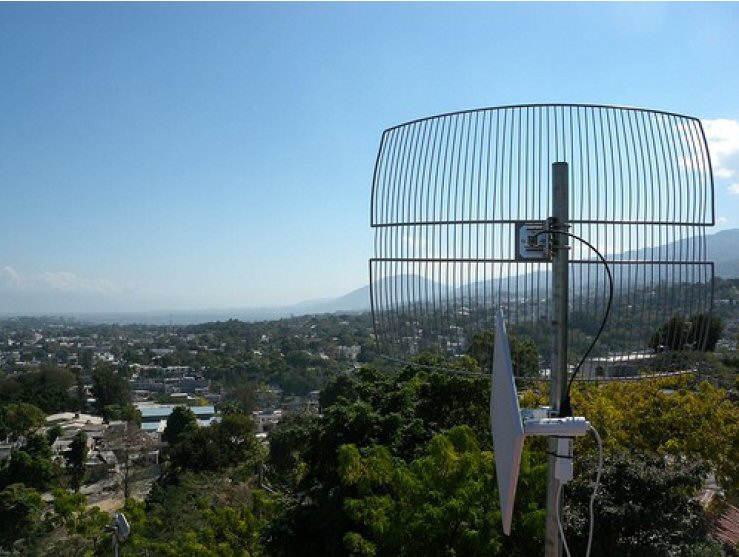
Wednesday, December 8, 2010

Microwave Projects =/ ARRL

It was very sad to read the passing of John Champa, K8OCL. He was former Chairman of the ARRL HSMM (High Speed Multimedia) Working Group. He was also the High Speed Multi-Media Radio Contributing Editor for CQ VHF Magazine.

Unlike most hams he had a high level of energy and ambition for his work on HSMM and in other areas of the hobby not well explored.

I am beginning to sound like Wayne Green with my ARRL critical comments.

But hey, they led me on, to think there was some sort of Microwave Bandplan changes in the midst. Truth is, I am not sure of the status if this, and can't get any real answers from the league.

Regardless if these jokers want to live in the past or not, here is an interesting thing to consider:

Amateur Allocations - Little known fact

Did you know in the US amateurs have access to approximately:
3.75 MHz of HF (160m-10m) spectrum
67 MHz of VHF/UHF (6m-33cm) spectrum
24.095 GHz of microwave (23cm-300GHz) spectrum

Of the above, over 99% of hams use a tiny fraction (0.3%) of the total ham frequency allocations while the remainder of our available ham allocation is essentially ignored. By the way, ARRL said that as of 4/2010, there were about 688,500 personal ham radio licenses in the USA. If only one percent of these were microwave users, that would be 6885 hams. We often hear that the majority of licensed hams are inactive. How many microwave experimenters do you know?

Source: hsmm-mesh.org

The realization occurred I was just a Technician over 10 years ago was that wow, there is a lot to explore and learn in the Microwave arena.

Since then I have learned a lot and found it absolutely critical to have that under your belt.

I remember reading the HSMM partnership with the North Texas Microwave Society when John, K8OCL moved to Texas. And have to concur that is a great idea.

Since the ARRL has been so quiet, I have decided I need to do the same. But I will be supplementing my blog space with more technical microwave experimentation articles in hopes of helping spur others on.

Since the mid-90's when I got into the hobby I have been connected to a then- high-school technology club. Ever since the same basic group of now 30's aged guys get together to shoot-the-shit, complain about the ARRL :-) and most importantly see what we can build.

What you will notice from my future blogs is that there have been few HF related projects, and many microwave. As it should be.

It's a shame the ARRL doesn't understand simple math. There is far more to lose in our microwave spectrum than HF. Because there is tons more of it, and hardly any hams use it, and the commercial squatters actually see it as useful spectrum.

Hmm, if only we could do more than throw money to protect spectrum. Perhaps the following microwave projects could be QST material to help foster so actual use? Naa.. that is right we don't want to make anyone smarter. I am a believer that if ham radio is to evolve, then QST needs to. The concept that QST needs to continued to be watered down just doesn't stick with me.

The Proposed NTIA "Fast Track" Spectrum Reallocation shows that our 2.3 and 3 GHz allocations may be endanger. So to start off here is a 4 watt power amplifier for 2 GHz.

Thursday, November 11, 2010

Our Community Leaders


I just received the December QST Magazine. There wasn't anything that really to terribly interesting and usefull for me in this issue again (sigh)... However the "It Seems to Us" editorial did catch my eye.... (here is a snippet)

Our Community Leaders

"Why do people become radio amateurs? If you ask new licensees, frequently you will hear that they are interested in radio technology or that they want to be prepared for emergencies and to provide public service communications. But there's more to it than that."

In general, people join groups with whom they have something in common and whose company they enjoy. Sometimes a desire to learn - to tap into a body of knowledge and expertise - is the motivator. At other times, sharing a common goal is enough to bring people together who might otherwise have no occasion to interact.

Amateur Radio is a global community. We can lay claim to being the first technology-based social network. The common goal that sparked the creation and early growth of the ARRL was the desire to develop a network of relay stations to overcome the limited range of the crude radio equipment of the day, so that amateurs could exchange messages with others well beyond the reach of their own stations.


Read the whole thing in the December QST, Page 9.

It's kind of interesting and fitting as I re-post this on a different social network. Oddly enough, where sharing expertise and knowledge doesn't require you to at the radio at the time of relay... A different demonstration of global communication nearly 100 years later.

It's also important to realize that the primary leadership role of a club is likely changing.

In the 90's maintaining a local repeater (or two) was the key to the local ham radio social network.

As more hams have since gained access to the internet and cellular phones, and now social networking sites online the repeaters are less active and less important.

It's time to step back and reevaluate the clubs role and priorities in 2010 and beyond.

And finally I have to repost this from Wayne Green's 11/01/10 blog:

A Ham Note

A note from Ben Alabastro W1VM chuckled over the September 2010 issue of QST having an article on a solar-powered repeater…and the Ham Radio December 1978 issue having an article on solar-powered repeater design. Glad to see you guys in Newington are still right on the ball.

Far's I can remember, our champions at the ARRL have never pioneered any new ham technology. To this day they're still pushing CW, a hundred-plus-year-old technology....


As pointed out, good leadership is hard to find at a national level. In summary: Local clubs really need to put more emphasis on leadership.

Monday, November 1, 2010

Kenwood TKR-850 as a D-Star Repeater


In my opinion this type of thing needs more attention. After all do-it-yourself has long been a hefty part of this hobby. And there is no better way to learn than a hands-on project like this.

Reason number two would be economics, but I think that is obvious.

The third is spectral savings. D-Star is narrowband, but buying a new system just robs another frequency pair from the pool. It seems people rarely take repeaters off the air, even if nobody really uses them. And these days it seems there are more repeaters in a geographic area, than there is activity.

So it seems best in my mind to convert something already out there. This would make a great club project.

This is great example of continued innovation of D-STAR technologies by incorporating non-Icom products into D-STAR environment.

Date: Thu, 07 Oct 2010 05:32:17 -0000
To: dstar_digital@yahoogroups.com
From:
Subject: K8BIG Port B Using Kenwood TKR-850 Interfaced to ID-RP2C

The K8BIG Port B D-Star Repeater in Cincinnati, Ohio is successfully running using a Kenwood TKR-850 Interfaced to the Icom ID-RP2C in place of the Icom Band module (ID-RP4000V). The usable range of the repeater has been effectively doubled from around 25 miles radius to 50-55 Miles radius.

The K8BIG system is on the WCPO-TV Tower overlooking downtown Cincinnati, OH with the antenna at 700' AGL. There are 3 50,000 Watt FM Radio transmitters, 1 250,000 Watt VHF DTV Transmitter, and 2 3,000 Watt LPTV stations on the same tower along with various commercial VHF/UHF/220 transmitters so the RF environment is pretty harsh - add in the neighboring (2 Blocks) tower with a similar complement of transmitters and it is downright brutal for any radio equipment.

The Icom band module was being swamped by the high RF levels at and surrounding the site, causing very poor effective receive sensitivity even after the TX-RX BpBr Cans and an additional band-pass cavity. I had partially remedied this with one side of a reject-only mobile duplexer, but that introduced around 6 dB of insertion loss. Even with the 6 dB insertion loss the effective sensitivity was improved. The Kenwood repeater has a much tighter front end and much better selectivity with adjustable front-end helicals so the additional receive filter is not necessary and the 6 dB insertion loss was removed.

After the interface was built we were able to plug and play into the Icom ID-RP2C controller and gateway. With the exception of the increased range there is no operational difference in the repeater - everything works identically to the Icom band module. Commands work, data works, D-Rats works, etc.

I will be building more of the interfaces shortly which can be used to interface any 9600 baud-capable analog repeater directly to the ID-RP2C. Anyone interested please let me know.

Thanks.

Dan Woodie
KC8ZUM


You may want to look at;
Michael, VK5ZEA's Homebrew DV Node Adapter to ID-RP2C interface.

John, K7VE's Kenwood TKR-820 Node adapter retrofitting.

And/or my Motorola GM300 retrofitting and commentary.

As a technical side note, one thing to consider when converting analog repeaters is the receiver IF bandwidth. To date there has been little discussion on narrowing receivers bandwidth to match the narrower D-Star signal. Just be aware that converting a 1950's era repeater to D-Star that might have a 60 Khz I.F. would be vulnerable to adjacent channel interference. A good overview of the theory can be found in a reprinted article from Ham Radio Magazine 1985, by WD5IBS.

Monday, September 27, 2010

Miscellaneous HSMM


For those not aware, a normal 802.11 channel is about 20 MHz wide.


The Atheros Chipset used in some of the professional grade 802.11/Wifi products (like Ubiquiti) can support half (10 MHz) and quarter rate (5 MHz) channel widths.


Obviously the maximum data rate (normally 54 Mbps for a conventional 20 MHz wide channel) drops, but even at quarter rate is still very usable with a maximum data rate of 13.5 Mbps.

The open Atheros driver talks directly to the hardware abstraction layer (HAL), and is also capable of frequencies outside of the Part 15 band.

[For a while no open source HAL's existed that can let you do 5/10 MHz mode. You had to use MikroTik, StarOS, IkarusOS, DD-WRT and a few others for these modes. As of June 2010, it appears that 5/10 Mhz support seems to be implemented in ath5k now.]

You can see the feasible channel selection overlay here:
http://www.qsl.net/kb9mwr/projects/wireless/allocations.html
The channels in light blue fall into overlapping amateur band space. And are acceptable for HSMM operation.

As you can see you can squeeze seven 5 MHz wide channels below the first Part 15 channel on 2.4 GHz, two of which are completely outside of the Part 15 overlap. (Thus, should have quieter noise floors)

On the 5 GHz band, there are thirteen channels that are completely outside of the Part 15 overlap.

And even more interesting is that that within the Atheros chip it is possible for licensed developers to enable a local oscillator generation for a direct conversion radio transceiver. This is Not an open function, but irregardless, this is how 802.11 products on 900 MHz (Ubiquiti XR9), and 3 GHz (XR3) (as well as other places) are possible and on the market.

Open source drivers unlocked the possibility of additional frequency support. It allows programmers to be able to write a driver. In summary; Atheros has allowed a third party to create a layer between the low-level functions of its chips and high-level drivers via the madwifi/ath5k development.

So what about unlocking additional channels in other chipsets/hardware?

Broadcom is the the chipset of most common Linksys WRT54G routers.

Broadcom has for a long time declined to provide non-licensed access to it's chips. A project that has been working to reverse engineer access using legal means had released its first working drivers for Broadcom 4300 series chips a few years ago.

If you are into the nitty-gritty, a recently released (2010) Broadcom wireless driver seems to have structures which imply the PHY in the chips can be directly controlled to program HSMM channels.

Also see:
http://lwn.net/Articles/456762/

http://linuxwireless.org/en/users/Drivers/brcm80211

For a slightly less technical overview of the various aspects of Modifying Consumer Off the Shelf Wireless LAN devices for specialized Amateur use, have a look here:
http://www.qsl.net/kb9mwr/projects/wireless/modify.html

I was recently asked my opinion about the use of Amateur Radio Networks like HamMesh, HamWan and BCWarn.

The question is pretty generic.  It all seems to stem from the ARRL HSMM working group from a number of years ago.  Despite that group falling apart, independently amateurs all over the place have embraced the technology.  It's great in my opinion.  As interest in voice  repeaters continues to wane, multi-media networks do make perfect sense.  These more modern types of networks have the potential to draw new blood into the hobby.  New hams who have software skills that can help the community with software defined radio and so forth.

Outside ham radio, as consumers were now live in a world where to keep thing interesting and new we have a flexible application space.  Be that apps on our phones, software on our PCs, and even firmware updates to our more hardware like devices.

That that has been notable absent in ham radio.  I.e. What it is when you buy it, is what it will be 5 years from now unless you want to totally replace it for the tune of several hundred dollars.

Ham radio used to be a good starting place for many who later entered broadcast and electronics careers.  Today those positions are few and far between due to disposable electronics and consolidation of engineers with mega broadcast groups.  What is the most notable/abundant "tech" career today is IT (information technology) work.

In my humble and simple opinion: These types of networks are long over due, and I am glad they are continuing to grow.  It helps ham radio stay relevant.

73'
Steve, KB9MWR
 

Wednesday, September 1, 2010

DIY Emergency Cell Tower

Chris Paget, KJ6GCG has over a decade of experience as an information security consultant and technical trainer for a wide range of financial, online, and software companies. Chris' work is increasingly hardware-focused, recently covering technologies such as GSM and RFID at venues such as Defcon and Shmoocon.

At the recent Defcon 18 conference he displayed a spoofed GSM cellphone tower using a Universal Software Radio Peripheral (USRP) transmitting 25 milliwatts, to present a GSM air interface to a standard GSM handset and uses the Asterisk software PBX to connect calls. The combination of the ubiquitous GSM air interface with VoIP backhaul could form the basis of a new type of cellular network that could be deployed and operated at substantially lower cost than existing technologies in the developing world.

http://openbts.sourceforge.net/

FCC rules aside, this is some powerful stuff. Imagine being able to restore cellular coverage in a disaster area using the foundation he has laid.

You can read more here:

http://www.networkworld.com/news/2010/083010-open-source-voip-cell-phones-at-burning-man.html

Here is a video that shows a test call being placed from a softphone talking to an Asterisk PBX in conjunction with GNU radio and a USRP to create a Part 15 signal level call to a cellphone.


Regarding using HSMM style techniques for running an amateur cell site:

http://www.innismir.net/article/513


Here is a similar project which modifies android phone to use asterisk running on something called a mesh potato. This would be great for developing areas. Just drop some of the MP's with a battery and a solar cell and poof... a phone system.

http://www.villagetelco.org/

Another favorite is using asterisk with amateur radio and repeaters

http://ohnosec.org/drupal/

Tuesday, August 3, 2010

HSMM Mesh Network in Texas


In Collin County Texas a groups of hams have been making good use of HSMM technologies to update their Amateur Radio Communications Health-care Emergency Services (ARCHES). This was traditionally setup of two meter/ 70cm voice and packet radios at 9 Austin, Texas area hospitals.

The setup provides key patient data to the City of Austin Emergency Operations Center, during significant incidents, even if normal communications are unavailable. It's highly successful. During every activation, patient data and other traffic passed more quickly and accurately than all other techniques tested during the activations.

The ARCHES program has been so successful, we have been asked to expand the system to ~ 40 additional area hospitals and clinics in central Texas.

Due to the existing significant number of packet collisions using traditional packet radio with just 9 nodes, they are migrating to HSMM.

With 40 or more packet stations in the area, passing packet data could slow to a crawl due to packet collisions.

The stations could only transfer data at 1200 baud, at best. Attempts at using 9600 baud showed that common radios do not pass 9600 baud data well. They distort the data so badly, that many resends are needed to get data through.The effective data rate seldom exceeds 1200 baud.

The HSMM proof of concept was demonstrated least year by AD5OO, NG5V, and KD5MFW who achieved a 10 mile point to point link across downtown Austin, Texas using only 35mw.

The Austin HSMM SIG has incorporated Optimum Link State Routing (OLSR) into custom firmware to provide automatic linking of radios that will be placed on Water Towers throughout Collin County Texas.

For more info see: http://hsmm-mesh.org

Sunday, August 1, 2010

HSMM VOIP Network in Spain

There is an interesting HSMM/ Asterisk VOIP network in Spain:

http://translate.google.com/translate?hl=en&sl=es&u=http://www.bicubik.net/hsmmn/

Alex EA5HJX, Andres EA5HIQ, Pepe EA5SW, Paco EB5HTC, Javier EB5BXA, Boletin EA5SW, Paco EB5EA, Sergio EA5HFB, Ernesto EB5JDY and several other hams are researching new technologies and telecommunication systems.

Can you explain are in street language, What is Intended and this project will bring to ham radio and its benefits?

So we can all understand, a HSMM network is just one of many highway lanes that can move large amounts of data at high speed. What would be technologically wireless broadband network of high capacity in her ability to integrate all technologies: RF, VoIP, multimedia, data ....

What are the Objectives of the Project HSMMN?

To promote knowledge and new technologies to the general public: The HSMM project has not only a technical aspect but also a social aspect, with aims to bring new technologies and their application in the real world to the public with expertise or not. Disseminating knowledge and new technologies to the general public: The project has HSMMN Not Only But Also to Technical aspect of social aspect, with aims to bring new technologies and their application in the real world to the public with expertise or without them.

We intend that anyone interested can collaborate, learn and practice the knowledge acquired. Anyone interested can collaborate, learn and practice the acquired knowledge. To this end, talks and workshops are planned in various radio clubs and associations interested in the project. To this end, talks and workshops are planned in various radio clubs and Associations interested in the project.
    
Creation of a research group developing new technologies to the world of amateur radio: This project not only aims to develop the network, which is the chief end of it, but to bring together people interested in researching and learning about new technologies to help amateur radio operators and emergency services communications.

Unifcar technologies: using computer systems and hardware elements to create an IP data highway you can travel by all types of information: audio, video, telemetry, APRS, etc ...

Collecting, processing and sending information through a variety of different technologies such as for sending APRS weather information (winds, rainfall, air pressure, barometric pressure, etc)

Ability to provide automated voice announcements from a centralized control room radio repeaters as required. Capacity to Provide automatic voice announcements from a centralized control room radio repeaters as required.

Creating an information service of communications systems available by region, by using a geographic number to gain access from the fixed, mobile and IP (VoIP).

Integration of other communication networks: IRLP, DSTAR, WIRES-II, E-QSO, etc.

Interconnection of repeaters using wireless technologies: Wireless, WiMAX. Each repeater could put a computer capable of processing all the telephony and transform it into Voip (voice over IP) that is transported through the network to reach another repeater HSMMN and is decoded by joining together all repeaters creating a mesh. Each repeater Could put a computer capable of processing all the telephony and transform it into VoIP (Voice over IP). That Is Transported through the HSMM network Reaches Another repeater network and is decoded by joining together all repeaters creating a mesh.

The whole process will be use Free Software.


Entities in the world of emergencies communications in Spain have shown interest in this project as an additional operational tool to consider for future medium to long term. Access from the PSTN will be in collaboration with guifi.net. This is an area open, free and neutral telecommunications network built through a peer to peer agreement where everyone can join the network


It looks like a nice mix of HSMM, Asterisk SIP and app_rpt technologies.

Alex Casanova EA5HJX, writes that he is working to develop a box that is a router (IP), and Asterisk (VoIP) and gateway with radio (analog and digital radio). Maybe this box can help in disaster like Haiti. Around the HSMMN´s Project we are investigate to integrate Asterisk VoIP with analog or digital radios.

Monday, July 5, 2010

Keeping relevant & moving forward - case in point


The following is a partial excerpt from a presentation by Glenn Currie, KD5MFW at Ham-Com 2010 held June 11-12 in Texas. (You can read the full presentation and others at: http://www.hsmm-mesh.org/)

Those deploying communications technology in developing countries are deploying systems in areas where there is little or no infrastructure... much the same as after a natural disaster.

They are using wireless mesh systems for much of their infrastructure. When you have no infrastructure due to disaster, natural or otherwise, Wireless mesh networks are being deployed.

An organization called Inveneo works to bring communications infrastructure to under developed countries.

They use Wi-Fi (802.11) wireless broadband equipment for much of their work. They set up Wi-Fi communications links and add their own resources including small web servers and end user net top computers so people can send email and check websites for emergency information.

Inveneo deploys to Haiti after the recent earthquake. The got in fast with gear and two man teams.

Inveneo installed a Wide Area Network using Wi-Fi type equipment. Inveneo quickly deployed an emergency network that served many agencies

Amateur radio passed some traffic in the aftermath of the recent Haiti earthquake. I have read the reports on the Internet and in the printed amateur radio magazines. Hats off to all the hams that pitched in and helped strangers in a bad situation.

But what systems past what percentage of the emergency traffic during the emergency? What really worked and carried the bulk of the emergency traffic?

It is known that the network deployed by Inveneo passed Thousands of Messages for multiple agencies, and their networks continue to pass traffic.

Amateur radio needs to have a broadband offering in their tool box.

All emergency communications organizations are making wide use of broadband RF communications techniques – except amateur radio.

I am confident, that if amateur radio manages to remain relevant, in the area of Emergency communications, future amateur radio license exams will include questions On how to configure wireless routers. This technology is that pervasive in the world. Hams can step up to the plate get into broadband, or they can leave it to groups like Inveneo and Part-15.org to provide emergency communications, in the ham bands.


I recently tried to point out that WinLink is showing its age and is far from ideal.

I was trying to suggest that we focus our efforts on the future, and made reference to a geostationary satellite as one avenue.

I received a bothersome/bullheaded comment from Stan Piekarczyk, Outagamie Co ARES EC "Should we wait another 10 years for this to get launched?"

To answer the question, NO!

The first step is admitting that something isn't cutting it, or is less than desirable. Step two is making it happen by stop being an amateur radio user, and becoming an innovator.

Ham radio technologies can Only advance if We make the happen. Glenn, KD5MFW points out some wake up calls for hams in his presentation. It's time to think ahead.

KC4BQK also blogged on this:
http://kc4bqk.blogspot.com/2010/07/january-2010-haiti-had-devastating.html

Thursday, May 13, 2010

An Univeral Radio Interface


All of the various digital modes out there require some sort of interface to your soundcard. Most of these interfaces use the serial port (RS-232) for keying, or some of the newer "Rig-blaster" interfaces can do provide that over a USB connection in the absence of traditional com ports on the newer computers.

There is still one thing lacking. Their own dedicated sound card. There is nothing more embarrassing than forgetting to disable your computers system sounds. And on the same token having to mess with the mixer settings each time is also annoying.

Thanks to the hard work of Steven Henke, W9SH and Jim Dixon, WB6NIL, they have ground work for a Univeral Radio Interface.

You can build your own using inexpensive USB sound FOB's/sticks. Or you can buy a pre-manufactured interface from DMK Engineering.

The basis of it all is the C-Media electronics CM-108, CM-108AH, or CM-119 USB interface chips.

PTT and optional Carrier Detect are accomplished using unused general purpose I/O lines of the USB sound devices chipset. Just plug this into a USB port of your computer, no other connections to the PC are necessary!

If you build your own, the sound fob will require some modifications to bring out PTT, block DC on the audio outputs, and attenuate the receive audio to match the microphone levels.

http://www.qsl.net/kb9mwr/projects/voip/USB-FOB.pdf

http://www.qsl.net/kb9mwr/projects/voip/usbfob-119.pdf


Unfortunately the number of programs that support this type of interface are presently limited. The good news is any one coding a program like ham radio deluxe or the like can easily adopt support for this interface. The channel driver is open and authored by Jim Dixon, WB6NIL and Steve Henke, W9SH.

If you an author of such a program you can find the definition in file chan_usbradio.c. I encourage you to add support for this inexpensive to build interface.

Friday, May 7, 2010

NWR SAME software decoder?

Server weather season is upon us.

I have often thought it would be nice if there was an open source (soundcard/ FOB based) SAME decoder solution.

One could dedicate a cheap USB sound FOB to a receiver parked on their NOAA weather radio frequency that would sit and decode any SAME data bursts.

I am thinking for interfacing to repeaters to provide custom weather alert signaling.

It does appear that software to decode SAME data exists, just not open source.

http://www.dxsoft.com/en/products/seatty/

A SAME software decoder would benefit projects like thelinkbox, and asterisk app_rpt as well as other projects.

{Update 6/11}
Greg Hewgill, has updated the source to his NWR tools, now at:

https://github.com/ghewgill/nwr


"Drew" Kirkman, W4KMC writes:
"TECHNICAL INFORMATION:
NOAA’s Specific Area Message Encoding (or SAME) protocol is used to further streamline the Emergency Alert System. Information about an emergency message (such as locations affected, type of message, where it’s coming from, and how long it will be considered effective) is transmitted in the form of digital bursts at the beginning and end of said message. These bursts are AFSK-modulated data with a throughput of 520.83 bits per second. Mark tone (binary 1) is 2083.3 Hz and space tone (binary 0) is 1562.5 Hz, with each tone lasting about 1920 microseconds. Bytes are transmitted in reverse order (LSB -> MSB), that is, 00010111 would be transmitted as 11101000. There are other technical specifications regarding its use in the real world, but it’s irrelevant here. Essentially, if you handed the right text to it, I have a SAME encoder. It outputs true SAME-encoded data."

See his NOAA SAME web based audio encoder/decoder at:
http://www.drewkirhttp://www.blogger.com/img/blank.gifkman.com/projects/noaa-same/

I also stumbled into:

"Using an Arduino Uno and a few other external components, I've been able to reliably decode the SAME messages."

http://www.raydees.com/Weather_Radio.html


{Update 2012}
Someone updated multimon, and it now has EAS / SAME decoding support!
https://github.com/EliasOenal/multimonNG/blob/master/README

And this PHP-based SAME AFSK encoder: http://www.whence.com/minimodem/

Tuesday, April 6, 2010

DIY Compatible D-Star Repeater - Green Bay


I have an experimental 440 MHz analog repeater that has been converted to D-Star. The GM300 radios have been interfaced using a Mark Phillips, G7LTT GMSK node adapter clone. The node adapter is in a duplex configuration, so in reality it has nearly all the functionality of an Icom D-Star repeater.

A D-STAR repeater is an expensive proposition. And many people are not happy with the Icom D-Star repeater performance. It's a number of things, most notable the poor receiver sensitivity. ~.45uV... In many cases the "repeater" is nothing more than two 28XX series radios in a rack mount box ... Pictures in the d-star digital yahoo group confirm this. Receiver desense is also on the list due to the use of plain-jane RG-58 inside the units. In addition, the receiver is prone to overloading by out of band high power FM broadcast signals.

Apparently the Icom G2 software is also not impressive, as discussed on the D-Star Gateway mailing list back in November 2009.

To build this adapter the cost about $100 (+ your analog radios) as compared to the cost of a Icom RPC-2 Controller plus a RF band module at about $2900.

For the longest time I was running Mark, KB9HKM's DVAR Hotspot Windows based software to compliment the board. For remote repeater site use I haven't been real keen on the idea as Windows computers seem to need reboots at inconvenient times.

So I have had a watchful eye on two Linux developments.

The first is by David, G4ULF, but he is still in the midst of releasing the program.

The other (probably less prominent) is by Scott, KI4LKF. His "rptr" program is available now.

All-in-all, I'm happy to report, version 2.93 has been running stable for me. Under Linux at least I have been able to script some ideas by trapping the debug messages with Perl.

For now, the frequency is 441.4625 +5 (SNP) The 40 watt GM300 radios are running cleanly at 20 watts.. The repeater is located in the village of Allouez near Heritage Hill State Park. The antenna is a Comet GP-6 Omni (9 dB), at about 35 feet. It is fed with LMR-400 coaxial cable. It appears to have about a 15 mile coverage radius.

Maxtrac/GM300 radios have a jumper inside (JU551) that sets whether the external connector will have flat or discriminator audio. You want discriminator. You may also need to add some 10 uF DC blocking caps on the RXA and TXA lines.

For more Information on the GMSK/ DSTAR Node Adapter/ Hotspot, please visit the websites below:

http://www.dutch-star.eu

http://www.gmskhotspot.com

http://d-star.dyndns.org/

Specifics on node adapter setup

If you are seeing what else you can do on a Linux platform with D-Star, I'd love to hear more about it.

{Edit Oct, 2010}
You may also want to take a look at John, K7VE's recent blog where he converts a Kenwood repeater for D-Star.

{Edit Nov, 2010}
And a Cincinnati OH, club using a Kenwood TKR-850

Sunday, March 7, 2010

Reasons to like / dislike D-Star


Here is a thought from a local club member that contacted me about D-Star:

The thought occurs to me that D-Star is one future standard and why not purchase a D-Star radio ahead of the roll-out? One issue is that it adds expense and why buy something today that you can’t use when the standard may evolve to something better in the future. Therefore, a waste of money now?


He actually has a good thought process. The thing I see is that since D-Star is based on the JARL standard, some parts of it cannot change. By that I mean, GMSK modulation and data rates for example. Evolve, yes it already is, and that is why I like it.

What he means is be replaced (not evolved) by something else radically different, perhaps TDMA based or what have you.

My feeling is that this is not a big consideration/fear simply because ham radio is in such a decline. You will likely never see another replacement simply because it's not on ham manufactures priority list as they market is simply not there.

Resons I like D-Star:
I've been in the hobby for nearly 15 years. I'm starting to become a been there, done that kind of guy. This is something different... a step in the right direction, to the future.

From a repeater stand-point the slow speed data & voice are not only spectrally efficient, but efficient on the club pocket book. Else you have to deploy separate APRS and voice repeater feedlines and antennas.

The framework is open so some development and evolution is possible. This paves the way for additional functionality that can be added later.

And it can be done remotely (SSH) since this is a digital system. No more spending $$ on new controllers and scheduling trips to the site to interface them.

D-Star helps attract a new breed to the hobby. The computer savvy. Which is good, since we should be one the path to software defined radio (SDR).

Some of my dislikes:

-Closed codec.
-User radios are not firmware upgradable
-DTMF encoding implemented wrong ?
-The term "D-Star" trademarked by Icom
-Attitudes
-One vendor

The attached images shows some starter ideas of how to add additional functionality.

One of the problems since ham radio is so stagnant is that no one really monitors. It becomes so infrequent that people are on at the same time. Those once 24/7 radio active hams are now amusing themselves with Ipods and smart phones.

So one of the script ideas report the callsigns of who is in the air to twitter. This way people know when to put down the Ipod and pick up the HT. Other scripts report current temperatures as text messages periodically.

Tuesday, March 2, 2010

An AMBE open source compatible codec?

First some history:

Depending on your point of view, Jon Lech Johansen is either your hero or adversary. To the copyright industry, Jon Lech Johansen has been a detriment to their policy of control since the advent of DeCSS (Decrypt Content Scrambling System.)

At the age of 15, “DVD Jon” wrote a computer program that allowed users to copy DVDs. Then he posted it on the Internet. A Norwegian private school awarded him a prize for making an outstanding contribution to society. The Norwegian government indicted him.

Jon spent 3 long years in the Norwegian courts proving his innocence. The American movie industry pressured the Norwegian Economic Crime Unit to press charges against Jon Lech Johansen in 2000 for allegedly bypassing the CSS copy protection on DVDs.


Early on; Bruce Perens, K6BP, amateur radio and open source advocate voiced concerns about D-Star’s use of a proprietary vocoder. Asking; does it really fit into the spirit of the hobby? Bruce makes a strong argument that an Open Source vocoder needs to be developed.

In May 2008, he announced that he will investigate the development of an alternative codec. The Codec2 Project: Next-Generation Audio Codecs and Vocoders for Two-Way Radio.

In August 2009 David Rowe, VK5DGR, began designing and implementing a replacement codec under the GPL.

“Proprietary codecs typically have small, novel parts of the algorithm protected by patents. However proprietary codecs also rely heavily on large bodies of public domain work. The patents cover perhaps 5% of the codec algorithms. Proprietary codec designers did not invent most of the algorithms they use in their codec. Typically, the patents just cover enough to make designing an interoperable codec very difficult. These also tend to be the parts that make their codecs sound good.”


Two open source compatible codec’s that come to mind:

Thomson Multimedia and Fraunhofer Society originally controlled the patents and licensing of the MP3 audio codec. Tip-toeing around the patented parts of the algorithms the LAME encoder was developed as free software application used to encode audio into the MP3 file format.

You might be surprised to find out that formats like Mp3 are actually someone's intellectual property, because the vast majority of Mp3 players and encoders don't pay royalties and are based on easily available implementations that have been out for years.

The DivX codec (used to compress lengthy video segments into small sizes while maintaining relatively high visual quality.) was actually an attempt by the now defunct U.S. retailer Circuit City to develop a video rental system requiring special discs and players.

The Xvid codec became a primary free and open source competitor offering comparable quality. It too was developed by tip-toeing around the patented parts of the DivX algorithms.

Many codecs, containers, file formats and other systems have been hacked to pieces and continue to be despite being the property of one party.

GIF images (up till 2006 when the patents expired) used a patented LZW compression scheme.

PDF is owned by Adobe but has been implemented by numerous others. there are many open-source and non-approved PDF viewers, editors and creators.

Unauthorized FLV players and converters exist as well. The same can be seen with real audio, real video, various Quicktime codecs, Dolby Digital AC3, AAC, and many others.

Think about it...... Do you like your freedoms? Thank those who have taken the time reverse engineered something. Welcome those types with open hands to the hobby. Those types of experimenters are just what this hobby once was and still can be.

{Update May 2010}
Interestingly enough the Digital Speech Decoder and xMBE codec library - can decode and recover the audio from P25 (Phase 1) IMBE, D-Star (AMBE), as well as Mototrbo/DMR (AMBE+2).  The open source software was unveiled by anonymous authors in May 2010.   It seems to have possibly stemmed from the May 2008 OP25 project, that provides a software IMBE voice encoder/decoder.  APCO Project 25 traces back to the early 1990's required publication of the IMBE and AMBE codec algorithms, which of course is how both projects came about.

It is important to note that so far there have been no take-down or patent violations filed from DVSI for these hobbyist adventures.  It should also be noted that the important patent claims may expire in 2015.  Basically all patents covering the AMBE-1000 chip have either expired or are not enforceable, due to disclosures made by DVSI.  See Bruce Peren's AMBE Exposed document for further information. 

It should also be mentioned that for most U.N. member states; non-commercial/research usage of patented technology is covered by exceptions on the definition of "patent infringement." Ref


Also worth reading: The Right To Reverse Engineer


Monday, March 1, 2010

DV Access Point Dongle (DVAP)


Unlike the DV Dongle, the new product allows Amateur Radio operators to walk away from the computer and transmit/receive D-STAR voice and data using a two meter D-STAR radio..... The DVAP is basically a GMSK modem with a 10 milliwatt two meter transceiver built in.


This is more crap for hard core D-Star enthusiasts. As if paying $200 for a regular DV dongle wasn't insane enough, just so you could talk AMBE over the internet using your PC microphone and speakers... now you can pay that plus the price of a D-Star radio, just to talk on the precious D-Star network.

Why in tar-nation Robin, AA4RC wasted any time designing the DV Access Point Dongle is beyond me.

It seems more logical to promote the GMSK node adapter hooked to a real retrofitted analog radio. Converting analog repeaters to D-Star at a fraction of the cost seems like something I'd get behind. At least then more than one person can use it.

This is another toy... that to me was a huge waste of engineering time. I thought Robin was going to work on a complete open replacement for the $300 Icom D-Star gateway software, hence www.opendstar.org.

All that has resulted is an add-on called D-plus, basically written to augment the DV dongle that Robin sells.

The AMBE decoder should be at the repeater end. Then users who want to talk on D-Star over their PC's can stream their voice using an open codec (no dongle) to the repeater, at which point it can be converted to AMBE with a community dongle.

Who is steering the D-Star boat? Will the D-Star newsletter ever promote such ideas? Or is it a mere advertisement to aid Icom and Robin in their financial endeavors?

Monday, February 1, 2010

Vellman K8055 & Activity Graphs


I recently picked up a Vellman K8055 interface board.

My original application was in conjunction with Jonathan, G4KLX's D-Star project. He has since added other methods of support for transmitter control, such as legacy serial port keying.

The Vellman board has 5 digital input channels and 8 digital output channels. In addition, there are two analogue inputs and two analogue outputs with 8 bit resolution. As one can imagine, it has a lot of potential applications.

I had a guy interested in my repeater activity graph scripting that I mentioned a few years ago. That was designed around repeaters with IRLP as this would just be a simple add-on for the Linux machine.

So for my first Vellman idea, I whipped up some perl code to watch a COR of a radio and provide the same logging and graphing functionality.

Refer to the original documentation if this interests you. I have updated it.

http://www.qsl.net/kb9mwr/projects/voip/activity-graphs.html

Sunday, January 10, 2010

VOIP / Asterisk / Phone Interfacing


For nearly a decade I tinkered to my hearts content with various applications and packet radio. I learned an immense amount about TCP/IP. From DOS based NOS packages, which lead to ethernet networking the shack, later to Linux.

Well, I have been tinkering with Asterisk for about 6 years with the same enthusiasm. Much to my surprise, I learned that one of the original founders of our ham technology club has man of the same interests. So much love that Mike Kassner has the vanity callsign, K0PBX to reflect that.

When it comes to interacting with other people not in the hobby, messages (sometimes emergency) are relayed person (ham) to person, and the second most common way is by telephone.

As a mater of fact, telephone communication is probably the largest part of non-face to-face communication.

So like a good ham, being knowledgeable in how the telephone system works and is changing is always beneficial.

With some quick research you'll learn that SIP has become a widely adopted defacto protocol. You'll also learn that an open source Linux based application called Asterisk is a very powerful tool that many hams are playing with.

I was most pleased to notice that the second edition of Jonathan Taylor, K1RFD's VOIP book does elude to a whole new world using Asterisk and app_rpt.

In my opinion, the ham radio tie-ins are just starting.... What a perfect time to get jump on board and help develop something new.

http://nerdvittles.com/ - You'll find an immense amount of tinkering ideas here.

Southeastern Asterisk Radio Networks - Digital Amateur Projects Association (DARPA).

Sunday, January 3, 2010

EmComm & AMSAT's Geostationary Satellite


A very interesting overview of AMSAT's phase IV Geostationary Satellite and the possible emergency communications implementations is in the Fall issue of CQ-VHF.

As you can tell I don't have a lot of love for Emcomm, but here is something that actually makes sense. A high speed multi-media capable, geostationary satellite.

AMSAT has recently begun negotiating with INTELSAT to get amateur radio communication payloads “piggybacked” on commercial geosynchronous communications satellites. This would be a first for amateur radio. It would allow earth stations to have 24/7/365 communications over a very large area using small fixed antennas. A small dish antenna would be able to access voice communications and text messaging. A larger dish antenna could provide access to video and high speed data. Because this has obvious value for emergency communications, AMSAT hopes to get considerable funding for this project from emergency communications agencies.

Hams are well acquainted with radio coverage problems while providing emergency communications. The high frequency bands suffer from hourly to daily propagation challenges. VHF and UHF simplex channels have limited geographic coverage. A repeater improves coverage while restricting all operations to its fixed channel pairs. Most of our current operating modes offer voice communications only. If data is transmitted it is supported at low rates such as 300, 1200, or 9600 baud.


I hope this gets some backing from the ARRL ARES directors. I honestly don't understand why and how all these recommendations come down the EC line to promote stuff like WinLink. They should all get behind something like this that makes sense, and help promote development and deployment of terrestrial HSMM networks.